 Back
Back

Elena Langer: The Dong with a Luminous Nose
Find out more






Fri 31 Jul, 2026
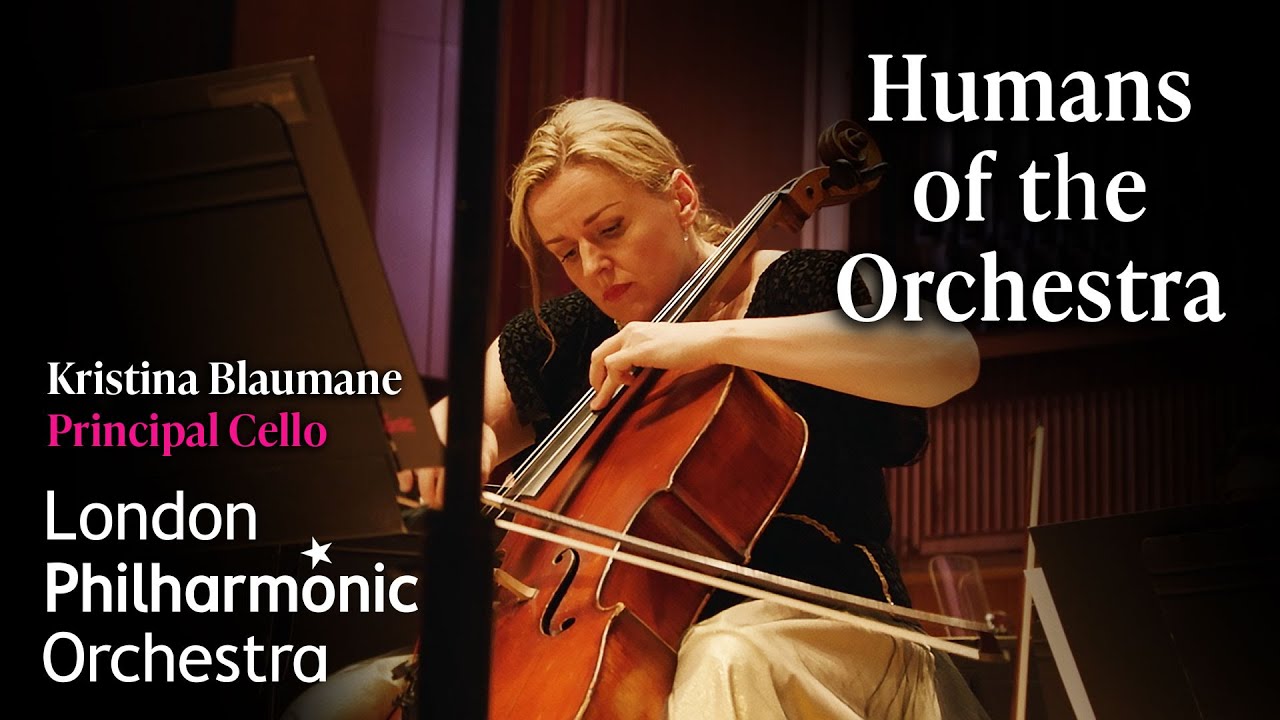
Meet Kristina Blaumane, Principal Cellist of the London Philharmonic Orchestra. In our Humans of the Orchestra series, we get to know the people behind the music. Here, Kristina Blaumane shares her journey as a musician, the experience of stepping into a Principal role in a large symphony orchestra, and what it takes to bring a section of 12 cellists together as one.
I’ve been in the LPO for 17 and a half years.
So, it’s been definitely a long journey. But most importantly, I learned so much as a musician since I started in this orchestra and since I started in my new role as a Principal for a symphony orchestra, which is quite different from being a Principal in a smaller orchestra when it’s only, let’s say, four cellos as opposed to cello section of 10 cellos or even sometimes 12. There’s a lot that you need to understand – how to drive, if I can use that kind of analogy. A bigger car, that kind of feeling of how you can help to make sure that 12 people breathe and react in the same way.
The Principal is obviously the flagman, the person who leads the section. The Principal should be a role model of how to play a particular phrase a particular way, and also a bridge between the conductor and the section. [I lead on] what kind of vibrato we’re going to use, or what kind of articulation or bow stroke, or sometimes fingerings, And I also communicate with other Principals. In many ways I think the section needs to also be very co-active or proactive, so they are also participating in this. But at the end of the day, the Principal is the one who does make that decision.
I feel so much more comfortable when I’m on stage with other people. And by that I mean when I’m actually in real collaboration with other people. Sometimes I feel the pressure, and sometimes I also feel so great to be here among people that I really like. Because of course when you’ve worked together for so many years and you’ve also been on tours together, you’ve basically lived together and shared so much with other people, you do feel like these are not just your colleagues, these are also your friends. And as friends, we support each other always. This orchestra is a very friendly orchestra. It’s one of the warmest environments that I’ve experienced and many other people have commented on that. You can’t be rivals with each other. You cannot be enemies with each other, you need to be friends. You need to be in some ways forgetting yourself in order to accommodate someone else. This is how it works, it’s a real conversation. And I think this is how this orchestra plays; it’s the most flexible, the most chamber music-like orchestra that I’ve ever experienced in my life.
I was born in a musical family. Both my parents were opera singers. When I was little, as far as I can remember, I remember music and I remember the theatre and I remember the rehearsal rooms in the opera. So it was clear that the moment I could reach the piano, I wanted to play a musical instrument and wanted to also go the same path as them. In Latvia, as in many Eastern European countries, we have a slightly different system in musical education, we have special music central schools that have this very thorough, quite strict musical upbringing that already prepares you for academy. They were tough years, but they were also amazing years because I had amazing teachers there and really very thorough music education until I was 18.
Then I went to the academy. I studied for two years in academy in Latvia and then I won a scholarship to study here in London for a year at the Guildhall School of Music and Drama. I enjoyed it so much that I knew that I wanted to stay in this country or at least continue my education here in London and particularly the Guildhall with my teacher Stefan Popov. And so I stayed for another four years. So I had five years in Guildhall after Latvia.
I first started in the Latvian Philharmonic Chamber Orchestra which was my first job. I was 18, I was still a student obviously and I was there for two years. I really learned my orchestra ethics of understanding how it is to play in a section, how it is to blend, what it makes to be a good colleague to listen to others. And I also learned all the repertoire, all the chamber orchestra repertoire. And after that, I again had a job while I was a student at the Guildhall which was my first Principal job and that was in Amsterdam Sinfonietta, another chamber orchestra.
When I look back and remember particularly proud moments of my section, I would say when we did the Ring Cycle of Wagner. We started it in 2018 and did every year and then of course COVID interrupted. In 2024 we completed the cycle with Götterdämmerung. Playing Wagner, it is such a challenge but at the same time Wagner writes so well for cellos. These are challenging parts but yet I felt these were such events, all these concerts that we did. I remember also my colleagues commenting on how really united the cello section was and how they stepped up to this challenge. These are the memories I will treasure forever, these moments when I felt like I was at the top of the wave. The feeling is just magical.
Hear it from Kristina herself

Hear Kristina play